

Basking shark ©Alex Mustard/2020VISION
Incredible journeys: National Marine Week
From birds flying thousands of kilometres to make their way back to the same burrow, to the mysterious migration of our biggest shark - nature is full of extraordinary journeys.
To celebrate National Marine Week 2026, we're celebrating the incredible journeys undertaken by animals living in our seas or around our coasts.
These stories are more than just feats of endurance, they're reminders of the delicate connections between ecosystems and the challenges wildlife face. Together, let's explore some of the most astonishing journeys in nature and uncover why protecting wildlife has never been more important.
Taking part with kids? Download your free activity sheet
Dive in and read these fascinating tales...
Atlantic salmon
Arctic tern
Basking shark
Bluefin tuna
Bottlenose dolphin
European eel
Grey seal
Humpback whale
Limpet
Manx shearwater
Spider crab
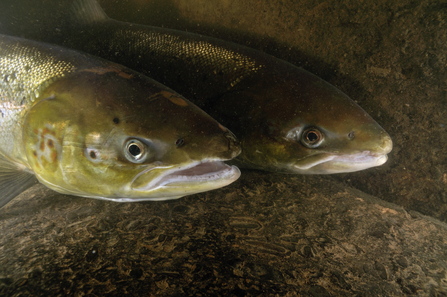
The homing instinct of Atlantic salmon
Although Atlantic salmon hatch in freshwater, like our rivers, they spend most of their adult life far out at sea where they feed and grow very quickly. They travel great distances to feeding grounds in cold northerly waters where they feed on small fish such as sandeels, krill, herring and crustaceans.
Most populations follow long migration routes to waters off Greenland and Norway. Other feeding grounds are in waters around the Faroe Islands, north of Scotland.
Between one and four years later, guided by their homing instinct, they return to the exact stretch of river where they were born, to reproduce.
© Linda Pitkin/2020VISION
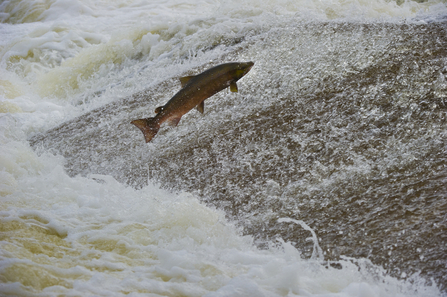
Leaping salmon ©Rob Jordan/2020VISION
From November to February, adult salmon make an exhausting upstream journey. They battle strong currents and leap over weirs and waterfalls to reach the gravelly streams near the river’s source. Here they spawn and a new generation begins.
Young salmon grow up in freshwater for up to six years, feeding on tiny invertebrates and small fish. When they are ready their bodies change to allow them to survive in saltwater – then it’s time for them to migrate out to sea, in a long and dangerous journey.
Changing ocean conditions, climate change, incidental capture in fishing gear (bycatch) and pollution all play a role in making this journey so treacherous. Atlantic salmon connect rivers and oceans and are a powerful indicator of healthy ecosystems.
Despite decades of conservation work in rivers, populations of this fish continue to fall, which shows how important it is to protect salmon at sea as well as in freshwater.
Soar from pole to pole with the Arctic tern
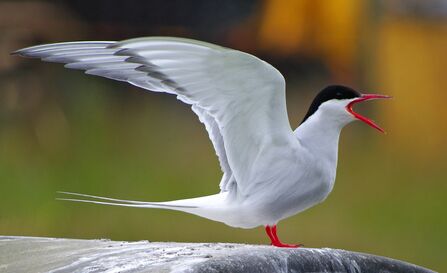
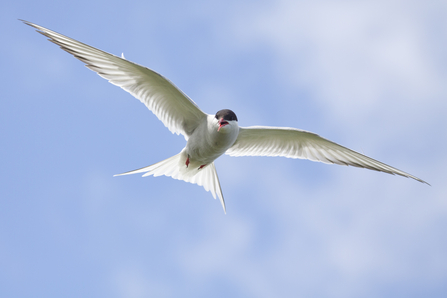
This record-breaking bird has the longest known migration of any animal. Every year it makes the trek from its Arctic and subarctic (including the UK) breeding grounds to the Antarctic coast and back again – a journey that can be up to 59,000 miles. Over its whole life, an Arctic tern can fly the same distance as taking three round trips to the moon!
©Gillian Day
© Tom Marshall
They arrive in the UK in April, mainly nesting on islands around the north of England and Scotland, with smaller populations in Wales, Northern Ireland and the Isle of Man. They spend the summer filling up on food and raising their young, before leaving in September.
These terns are definitely fierce. They’re known for dive-bombing intruders to their nest with their sharp beak.
An elusive gentle giant of our seas
The basking shark is the second largest fish in our ocean, but this gentle giant feeds only on zooplankton. They eat this by filtering it out of the water with their enormous mouths. Despite being so large, basking sharks have occasionally been seen leaping out of the water! You're most likely to spot them by seeing their dorsal and tail fins sticking out of the water.
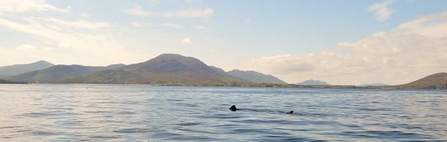
A solitary basking shark swimming with Malin Head in the background © Donal Griffin
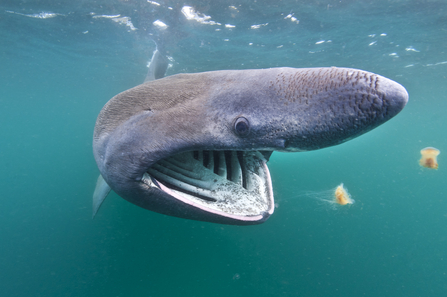
Basking shark ©Alexander Mustard/2020VISION
You might think a creature this big must be easy to track – but we still know very little about the movements of basking sharks. They spend the summer in our waters and satellite tracking has shown they can migrate long distances, with some tagged sharks showing up off the Azores and even Newfoundland.
We also don’t know much about their breeding. We believe they court and breed in our waters, but no one is quite sure where they give birth. Female basking sharks hatch their eggs within their body and then give birth to their offspring – how incredible is that?
If you want to have a chance at spotting basking sharks, the best places to try are the Hebrides, Isle of Man and Cornwall. It’s really important not to disturb them, so remember to follow the basking shark code of conduct.
The return of bluefin tuna – powerful, graceful and built for speed
Bluefin tuna are incredible animals. They’re built for speed with their torpedo-like body allowing them to reach up to 40 miles per hour for short bursts – that makes them one of the fastest fish in the ocean! It’s quite a spectacle to watch these large apex predators hunt smaller fish off our shores – the sea can appear to boil as lots of fish splash around and, if you’re lucky, you might spot one leaping out of the water on the chase!

Bluefin tuna © Joe Pender
Due to overfishing in the Atlantic, bluefin tuna disappeared from UK waters for more than 60 years. But over the last decade sightings have slowly been increasing, in part due to improved fisheries management and also due to the changing climate.
Thanks to GPS tracking we now know that these marathon swimmers spend time in the English Channel before migrating to the Bay of Biscay, with some heading out even further to the Azores. They then migrate to the Mediterranean where they reproduce (spawn).
Although it's brilliant news that we're starting to see bluefin tuna again in UK waters, we shouldn't take this for granted. We must learn from the past and make sure strong fisheries management measures are in place to protect these amazing fish into the future.
Get to know some of our beloved bottlenose dolphins
Perhaps one of our most beloved ocean animals, sightings of bottlenose dolphins bring joy around our coasts! They love to jump out of water – look for boisterous splashing and breaching. They’re very sociable, usually seen in groups, known as pods. We have two main types of bottlenose dolphin pods in the UK:
- offshore communities which usually occur in large groups and have wide ranging movements
- coastal communities which are often in smaller pods and can be frequently found in their favourite places
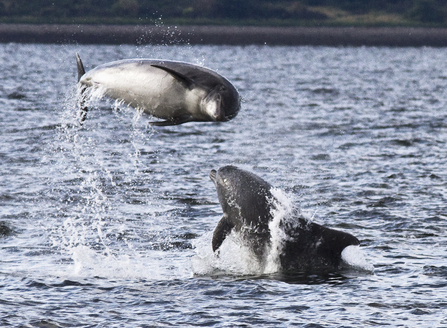
(c) Harry Hogg
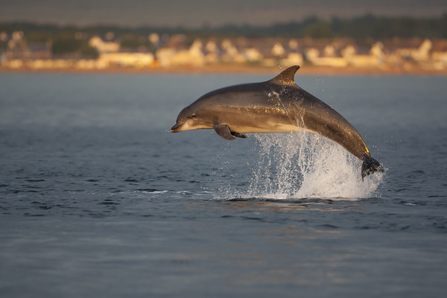
John MacPherson/2020VISION
Many Wildlife Trust staff and volunteers monitor the dolphins found around our coasts through citizen science surveys. By taking photos of the dorsal fin (the fin on a dolphin’s back), we can identify individuals from the unique pattern of nicks and notches. It’s a bit like a fingerprint!
Thanks to photo ID tracking like this, we can see where dolphins are travelling. For example, we now know that bottlenose dolphins from the east coast of Scotland have been expanding their range in recent years, with some photographed as far away as Denmark.
Similarly, a pod of around 38 bottlenose dolphins that are resident inshore off the English south coast are thought to have expanded their range. From being seen almost daily around the Cornish coast in previous years, they now appear to be covering a much wider range - all the way between Cornwall and Sussex!
Sadly, these dolphins are at risk of entanglement in marine litter and fishing gear. Bycatch is when animals that aren't the intended target are caught in fishing nets. We're urging the UK Government to take action to reduce bycatch and the impact of fishing on dolphins, porpoises and whales.
The epic life journey of the European eel
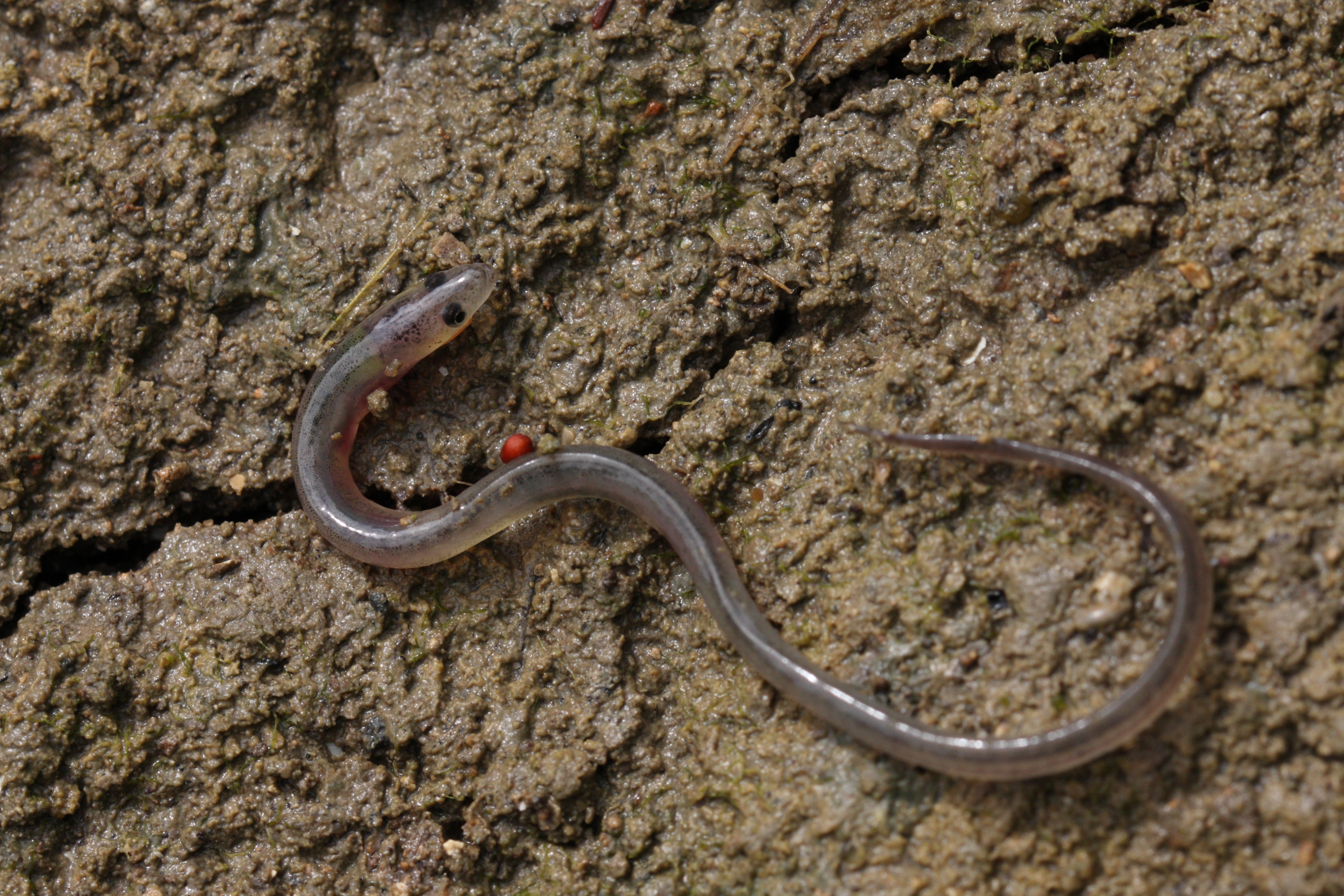
Few creatures in our waters live a life as extraordinary at the European eel. Born thousands of miles away in the Sargasso Sea near Bermuda, eel larvae drift for up to two years on ocean currents before they arrive at our shores.
Tiny, transparent juveniles move inland from estuaries into rivers, canals and lakes - sometimes wriggling across damp land to get there! They spend years growing and feeding in freshwater until finally, after many years (sometimes more than a decade!), they begin the final leg of their journey. Adult eels swim all the way back to the Sargasso Sea to spawn before dying, completing their long migration.
There are many threats European eels face during their lifetime, including overfishing, migratory routes which are blocked by dams and other structures, pollution, climate change and predation.

Grey seals need their space to thrive
95% of the European population of grey seals live in Britain, making our shores a haven for this impressive mammal. If you’ve ever seen the curious face of a grey seal bobbing in the waves when visiting the beach, you’ve been in for a treat.
Our grey seals spend a lot of their time out at sea, but come ashore to rest, moult their coats, digest their food and to breed. As they spend lots of their time out at sea we don’t know exactly where they all go, but we do know they can travel great distances. We know this because grey seals have been monitoring using tagging and even from photo identification by looking at their key markings.
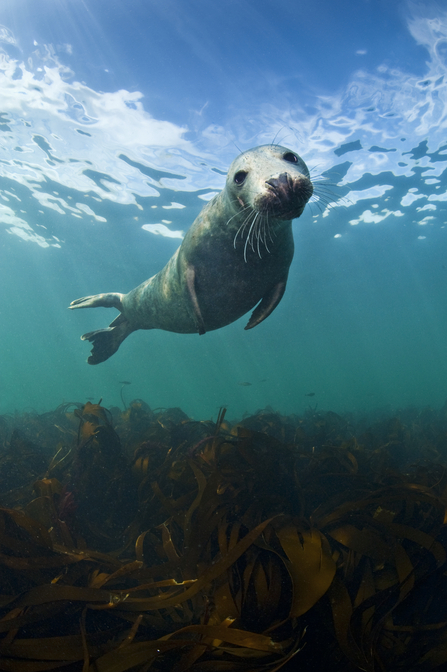
Grey seal ©Alexander Mustard/2020VISION

Grey Seal ©Chris Gomersall/2020VISION
In 2025, a grey seal made a 320-mile journey from her home off the northwest coast of Germany to East Yorkshire. Yorkshire Wildlife Trust were able to establish her point of origin after spotting an orange tag on her flipper. That just underlines the importance of monitoring. It helps us to really understand where wildlife travels to and from, the routes they take, and how best we can protect them.
If you see grey seals when visiting the coast, it’s very important to give them plenty of space. Keep your distance and keep dogs away. Disturbed seals can become very stressed. Find out where to report seal sightings.
Delight in a breaching humpback whale
After the devastating commercial whaling industry had them teetering on the brink of extinction, humpback whales are making a comeback and are increasingly common in UK waters. Humpbacks are baleen whales, meaning they have sheets of baleen instead of teeth and they filter tiny krill and small fish through these sheets. They travel through our waters from the feeding grounds in the Arctic to reach their breeding grounds in the warmer waters off Cape Verde.
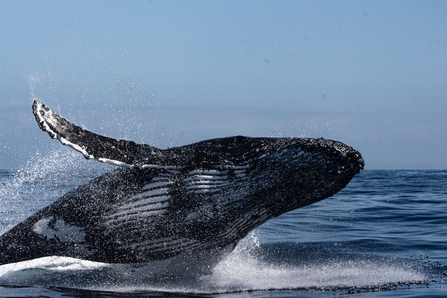
Humpback whale by Chelsea Bradley
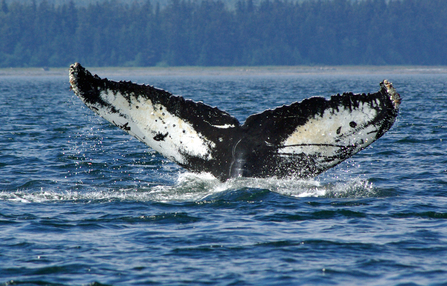
Humpback whale ©Gillian Day
This unmistakable whale has a unique knobbly head and is well known for its acrobatic behaviour. There are few things as thrilling as seeing a humpback breach clear of the water! Cornwall and Scilly’s most famous humpback is called Pi. Pi has become a regular winter visitor, returning to the Isles of Scilly almost every year since 2020.
Another regular visitor to the UK seas is Morvil. Morvil has been seen many times since 2016 and has also been spotted in Cape Verde breeding grounds! This whale is an important reminder of the urgent need for safer fishing practices because it bears the marks of entanglement in fishing gear, including a partially amputated tail fluke.
While it’s fantastic news that these whales are recovering, it’s essential that world governments continue to act to protect our seas to ensure they have a bright future.
Limpets know their way home
Limpets may not spring to mind when we say ‘incredible journeys’ but they are remarkable! They roam over the rocks when the tide is in, eating algae, but they always return to their own favourite spot when the tide goes out.
They do this by following the chemical trail that they left on their travels. Their grind their shell into their chosen spot, and eventually an obvious 'scar' in the rock is created. This 'home scar' helps the limpet to better attach to the rock, stopping it drying out until the next tide comes in.
Always remember to leave limpets alone and don't try to pull them from the rock.

Limpets ©Richard Burkmar
There's no place like home for the Manx shearwater
Did you know that around 80% of Manx shearwaters return to the UK to breed? This mysterious seabird, known for its haunting call, is sometimes called an ocean wanderer. It takes on a massive annual migration - flying up to 10,000 km every year!
This migration has only recently been understood due to the GPS tracking of some of these birds. After they breed here in the summer, the birds head south to western Africa, then they cross the Atlantic to reach the coast of Brazil and follow it south to their wintering grounds near the Patagonian shelf.
Tracking has also shown that as well as their international migrations, they also take on epic journeys every day while searching for food. They’ll travel anywhere between 40 and 400 miles, looking for fish, squid and crustaceans.
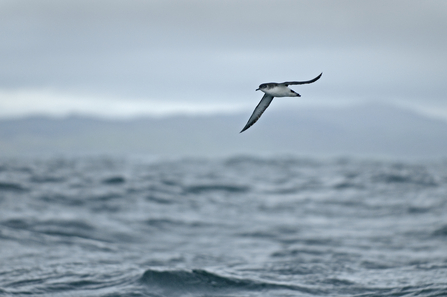
Manx shearwater © Chris Gomersall/2020VISION
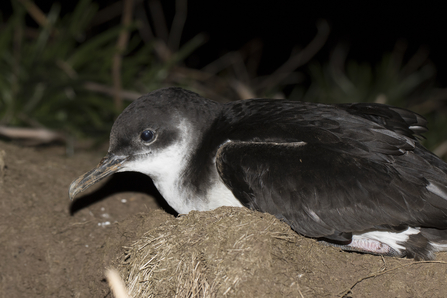
© Chris Lawrence
The synchronised shedding of the spider crab
Every summer, spider crabs undergo their own journey and transformation. They travel together from deep to shallow coastal waters and back again as part of their lifecycle. In fact, sometimes they can travel over 100 miles in total. That’s a long way for a small crustacean!

Spiny spider crab ©Paul Naylor www.marinephoto.co.uk
They congregate in large numbers to shed their old shells and breed, allowing them safety in numbers while they wait for their exoskeletons to harden. Huge mounds of up to a thousand crabs have even been reported!
While this crab is a colourful orange, its shell is often covered in algae, giving it a green hairy look which helps it camouflage against the seabed. To spot a spider crab, visit the south and west coasts of England and Wales.

A big thanks to Postcode Lottery players, who support our marine conservation work and help make National Marine Week possible.